
The most sought-after career paths in today’s technology-driven world include both Cybersecurity and Software Engineering. Both have critical roles in shaping our digital future — one focuses on building secure systems, and the other on creating innovative software solutions.
Despite their overlap, the goals, skillsets, and career trajectories of these two fields differ significantly.
If you’re trying to decide whether to become a Cybersecurity expert or a Software Engineer, this guide by Total Educator will help you understand the key differences in skills, responsibilities, and career opportunities between the two domains.
Understanding Cybersecurity
Cybersecurity is the practice of protecting computer systems, networks, and data from unauthorized access, cyberattacks, or theft. As technology evolves, so do the threats — making cybersecurity professionals vital across all sectors.
Cybersecurity experts develop defense strategies, detect vulnerabilities, monitor systems for breaches, and respond to incidents. Their aim is simple yet vital: to keep information safe.
Core Responsibilities
- Performing risk assessments and vulnerability testing
- Implementing firewalls, encryption, and security controls
- Monitoring network traffic for malicious activity
- Responding to and mitigating cyberattacks
- Educating teams about best practices in data protection
Popular Certifications in Cybersecurity
One of the most recognized credentials in this field is the Certified Ethical Hacker (CEH) certification. It demonstrates that you can think like a hacker — but act like a security professional.
CEH professionals identify and use system weaknesses to strengthen defenses before real attackers can exploit them.
At Total Educator, learners can take industry-aligned courses in Cybersecurity, such as:
- Certified Ethical Hacker (CEH)
- CompTIA Security+
- CISSP
These programs help you develop the skills required to excel in this rapidly growing field.
Software Engineering Basics
Software Engineering involves all aspects of software development, including design, construction, testing, and maintenance. Software engineers are problem solvers who use programming languages and frameworks to develop everything from mobile apps to enterprise systems.
They work across all stages of the Software Development Life Cycle (SDLC) — from requirement gathering to coding, testing, deployment, and maintenance.
Core Responsibilities
- Writing and testing code for applications and systems
- Collaborating with teams on software architecture and design
- Fixing bugs and improving performance
- Integrating new features and technologies
- Managing software updates and scalability
Software engineers can specialize in domains such as frontend development, backend development, mobile app development, or even AI and machine learning.
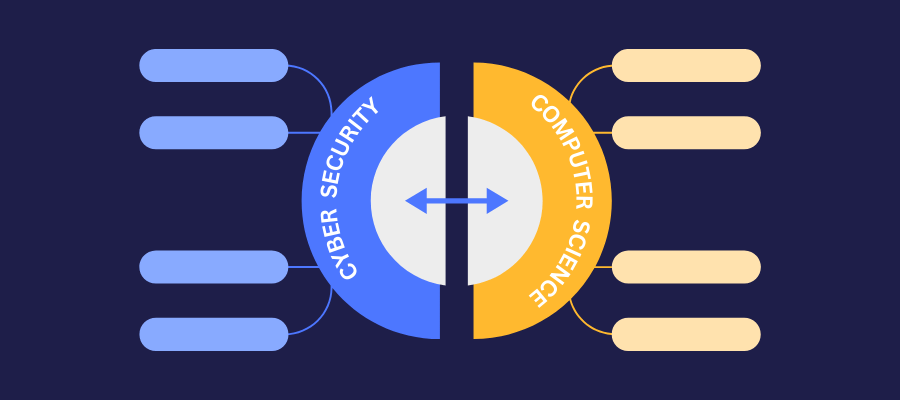
Key Differences Between Cybersecurity and Software Engineering
Although both fields require strong technical skills, they differ in focus, approach, and objectives.
| Aspect | Cybersecurity | Software Engineering |
|---|---|---|
| Primary Goal | Protect systems and data against threats | Design and build software solutions |
| Core Skills | Network security, encryption, risk management, ethical hacking | Programming, algorithms, database management, system design |
| Work Style | Defensive and preventive | Creative and constructive |
| Certifications | CEH, CompTIA Security+, CISSP | AWS Certified Developer, Microsoft Certified: Azure Developer, PMP |
| Common Tools | Wireshark, Metasploit, Nessus, Kali Linux | Git, Visual Studio Code, Docker, Jenkins |
| Industry Demand | High in finance, healthcare, and IT sectors | High across all digital and tech industries |
Career Path and Growth Opportunities
Cybersecurity Career Path
Careers in cybersecurity often begin with IT-related roles such as Network Administrator or Security Analyst. With experience and certifications like Certified Ethical Hacker (CEH) and CISSP, professionals can move into senior positions such as:
- Cybersecurity Engineer
- Security Consultant
- Penetration Tester (Ethical Hacker)
- Chief Information Security Officer (CISO)
Demand for cybersecurity professionals continues to surge as organizations fight increasing cyber threats globally.
Software Engineering Career Path
A career in software engineering typically starts as a Junior Developer or Software Engineer, and can progress to:
- Senior Developer
- Software Architect
- Engineering Manager
- Chief Technology Officer (CTO)
The software industry continues to grow, driven by the demand for digital transformation, cloud computing, and AI-based solutions.
Skillsets You Need to Excel
Cybersecurity Skills
- Strong understanding of network protocols and firewalls
- Knowledge of ethical hacking and penetration testing
- Mastery of risk management frameworks
- Familiarity with regulatory compliance (GDPR, ISO 27001)
- Analytical mindset and attention to detail
Software Engineering Skills
- Proficiency in languages such as Python, Java, C++, JavaScript
- Understanding of data structures and algorithms
- Experience with API integration and cloud deployment
- Strong debugging and problem-solving skills
- Collaboration using Agile and DevOps methodologies
How Project Management Fits In
Whether you pursue Cybersecurity or Software Engineering, Project Management plays a key role in success.
Both professions require the ability to manage timelines, coordinate with teams, and ensure efficient project delivery.
Having project management knowledge or certifications like PMP or PRINCE2 can give professionals an advantage in leadership roles.
At Total Educator, many training programs integrate Project Management principles to help learners apply real-world strategies effectively.
Which Career Is Right for You?
Your ideal path depends on your interests and strengths:
- If you enjoy problem-solving, investigating security threats, and protecting data, then Cybersecurity is for you.
- If you love coding, designing systems, and building digital solutions, Software Engineering is your best fit.
Both fields offer competitive salaries, global opportunities, and long-term stability. However, Cybersecurity currently faces one of the most severe talent shortages worldwide, making it a lucrative and fast-growing field.
How Total Educator Can Help You Get Started
At Total Educator, we offer industry-recognized programs in Cybersecurity, Software Engineering, and Project Management — designed to help learners gain practical, job-ready skills.
Our Expert-Led Courses Include:
- Certified Ethical Hacker (CEH)
- CompTIA Security+
- Microsoft Certified: Azure Developer
- AWS Cloud Architect
- PMP Certification Training
Whether you’re looking to kick-start your IT career or advance your expertise, Total Educator provides comprehensive learning programs that prepare you for top certifications and high-paying global roles.
Final Thoughts
Both Cybersecurity and Software Engineering are essential to the modern digital ecosystem. While one focuses on securing technology, the other drives innovation and development.
Your choice depends on where your passion lies — building systems or protecting them.
With the right training, certifications like Certified Ethical Hacker (CEH), and expert guidance from Total Educator, you can confidently build a successful, future-proof career in either field.